What a design owes the person building it
1 min read
A crowdfunding registration flow handed to me as a Figma file. I built it in the browser, error states included, and learned what a handoff costs at the receiving end.
- Role
- Web Developer Intern
- Period
- Sep 2023 – Feb 2024
- Platform
- Web
- Scope
- Front-end implementation of the registration flow
- Outcome
- Handed to my mentor. Not deployed.
What I did
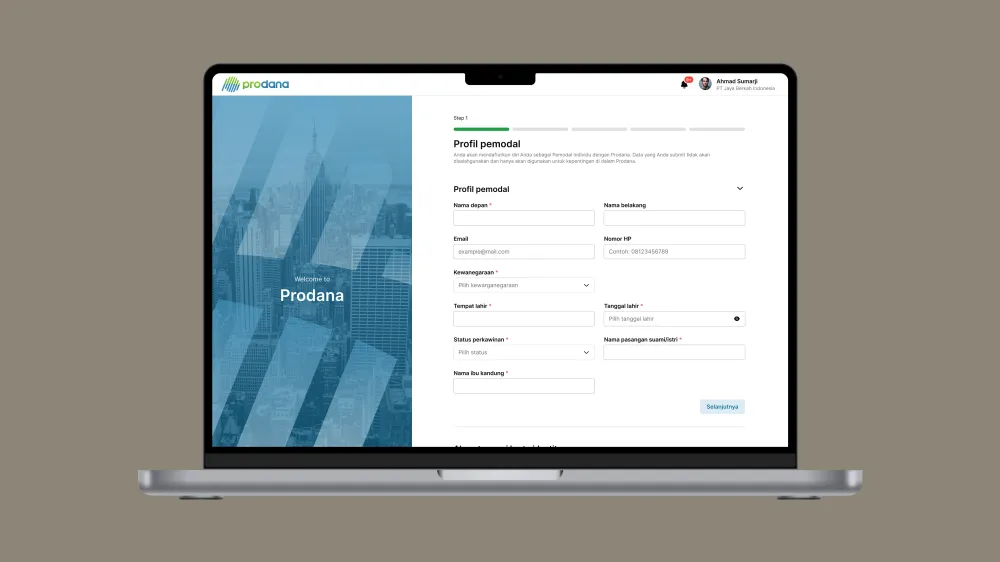
I took the registration flow from Figma and built it as responsive HTML, CSS, JavaScript and jQuery — start to finish, including the error states. Error states are the part that usually gets dropped from a handoff, and they are the part a user meets when something goes wrong.
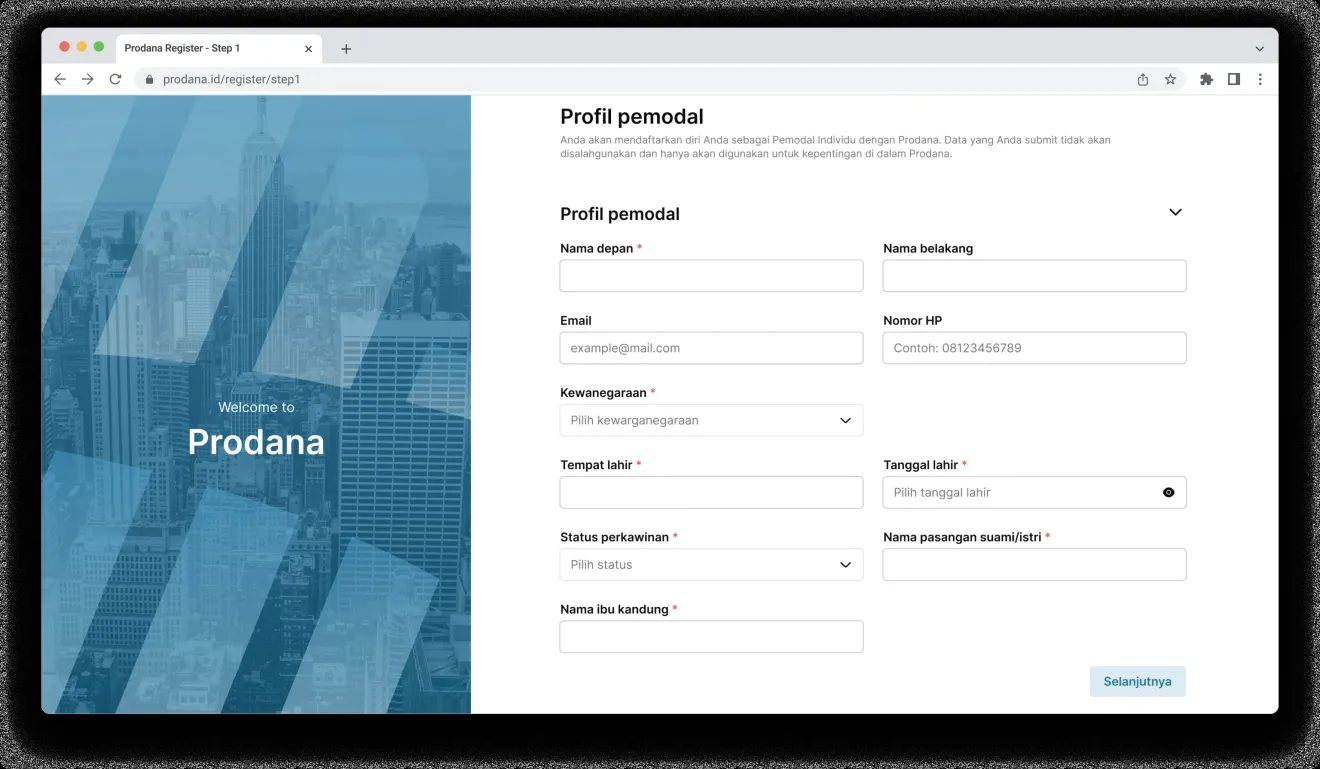
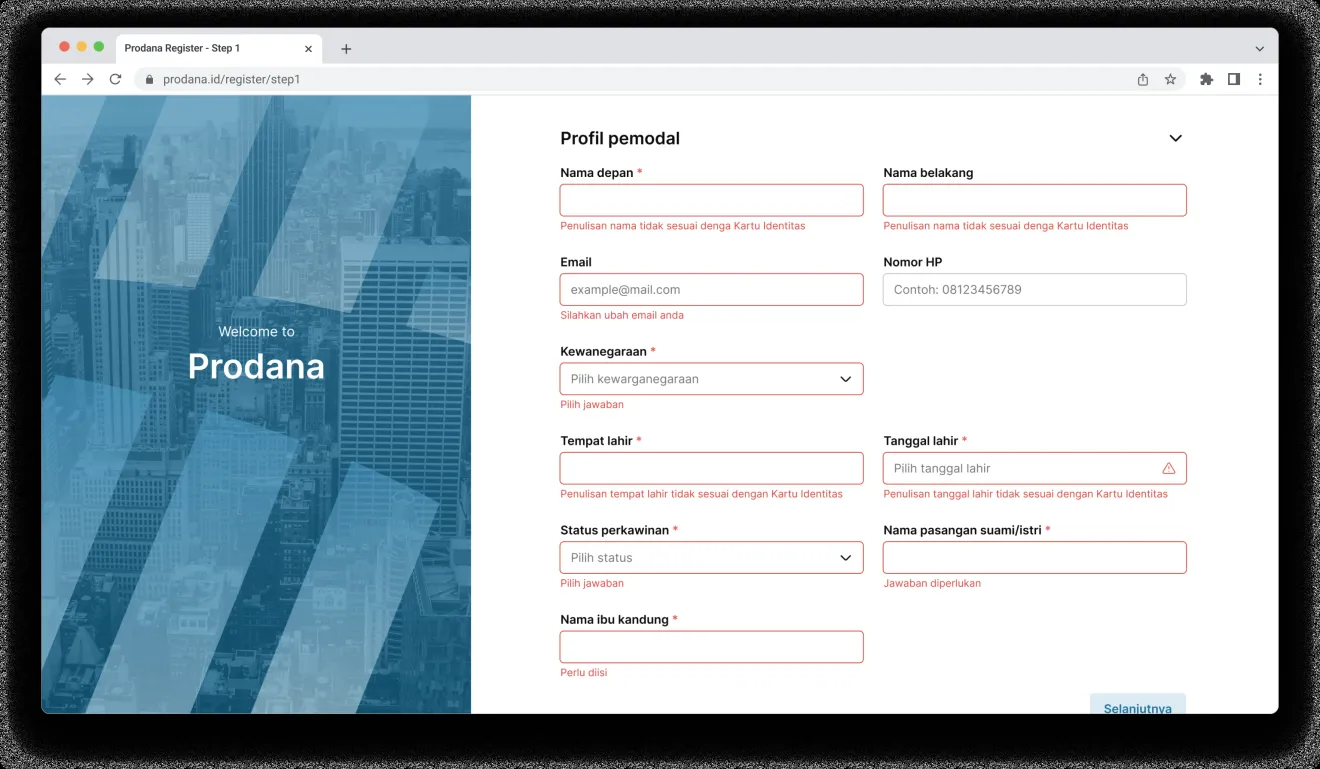
I made adjustments while building. Some assets had been handed over as PNG only, where an SVG would scale cleanly across screen sizes. I swapped them, because at implementation time the cost of a raster asset in a responsive layout is immediate in a way it is not in a static Figma frame.
I worked front-end only. The backend was past what I understood then, and I said so instead of guessing at it. Everything ran locally; I sent the finished slice to my mentor.
Afterwards I was given a CRUD exercise in Laravel and Bootstrap.
What I took from it
This is where I learned what a design owes the person implementing it.
Building is dramatically easier when the design is properly constructed — a real design system, auto layout that holds, and a hierarchy that survives contact with code. When those are there, implementation is close to transcription. When they are not, every screen becomes an interpretation, and interpretation is where handoffs break.
The PNG detail is the small version of the same lesson. Nothing in that Figma file was wrong. It just had not been built by someone picturing the layout at 360px on a real device.
The slice was finished and handed over; deployment wasn't part of the internship. What shipped was me — I design differently now, because I have been on the receiving end of a handoff.